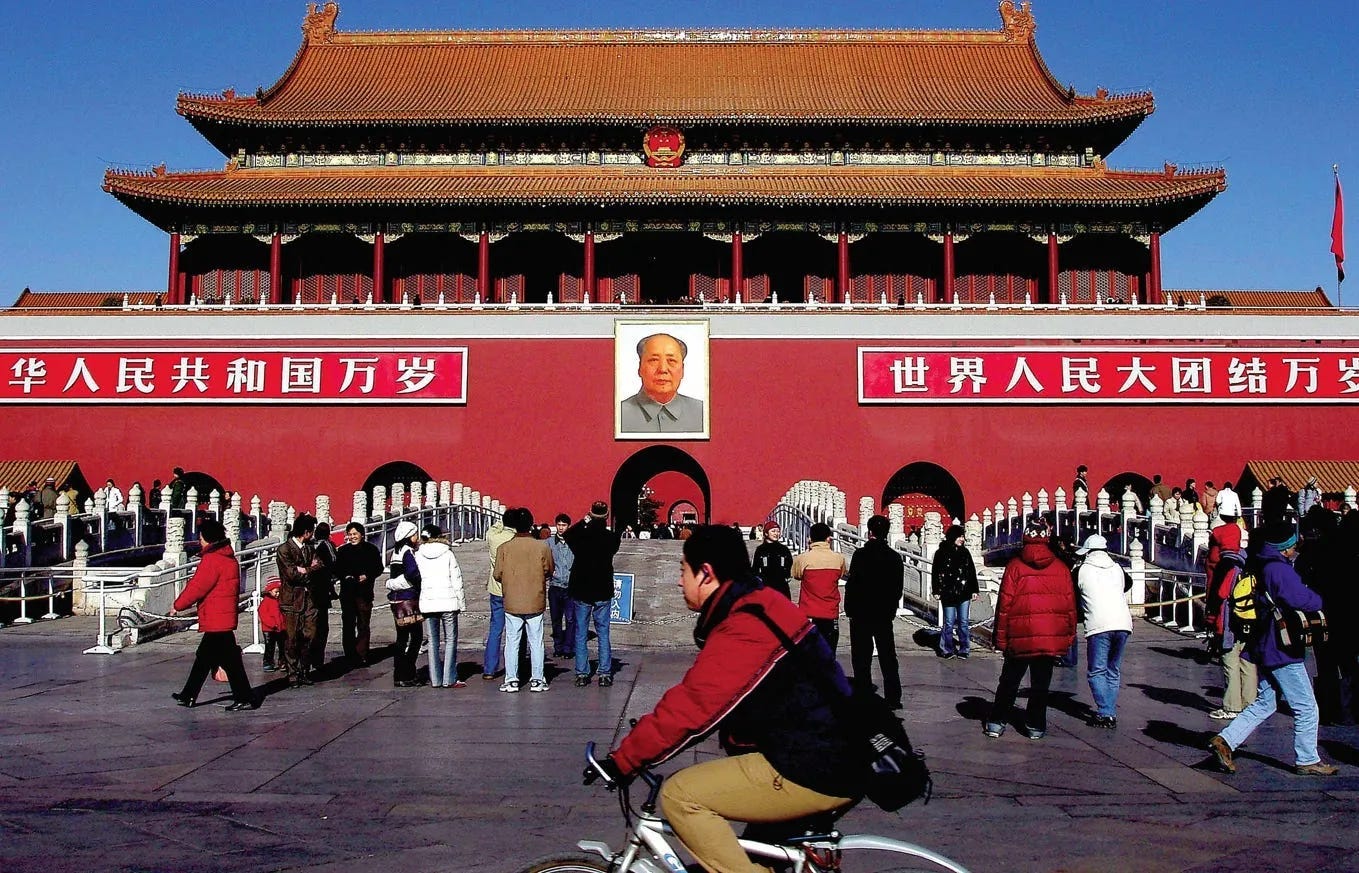
The Silent Understanding
The true agreements were made behind closed doors. Their effects will follow: subtle, unattributed, and many with minimal fanfare.

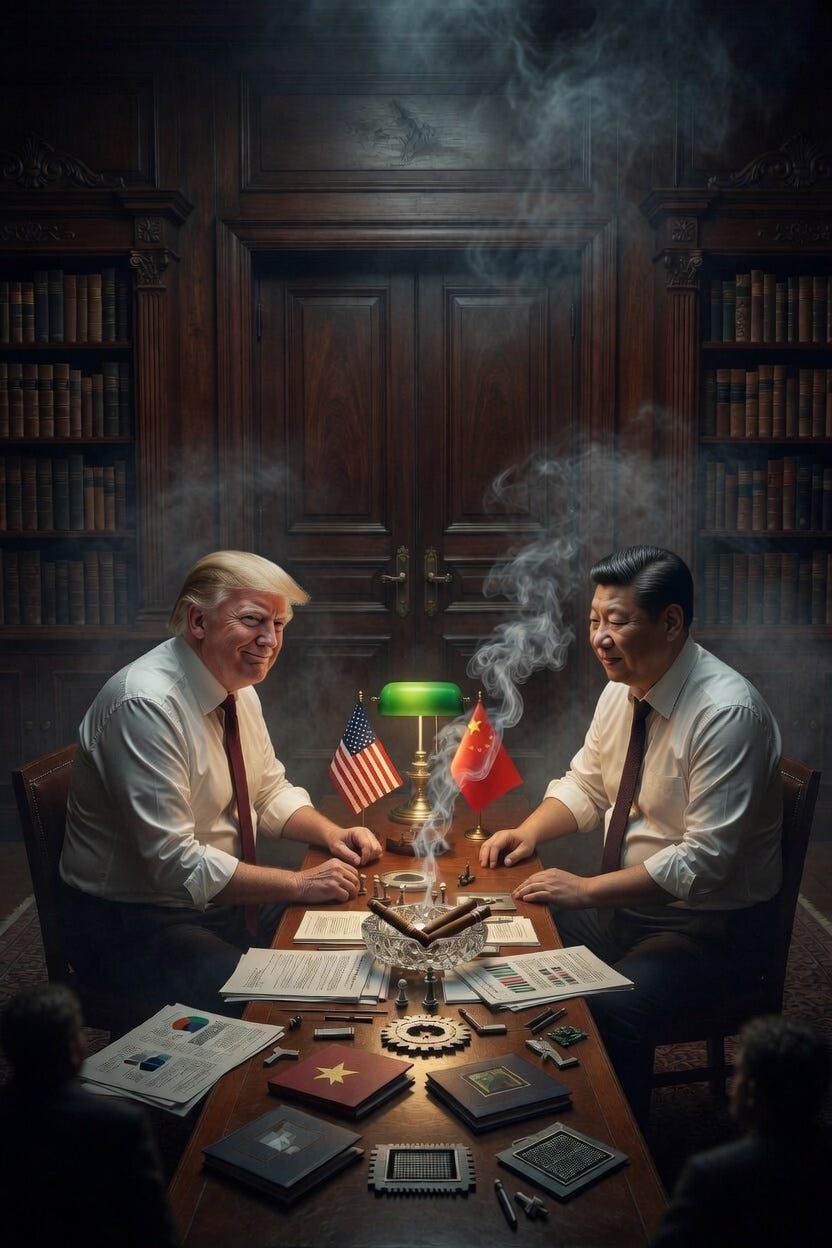
In the wake of President Trump’s recent Beijing summit with Xi Jinping, the first presidential visit since his first term, the official readouts were predictably sparse on specifics. Handshakes, state banquets, warm words about “stability,” and vague nods to expanded market access and cooperation on global flashpoints like Iran.
I penned a quick missive before this trip because I thought mainstream media and blue-check China Twittersphere were getting it wrong. After reading my news feeds today I stand by that opinion. What we are seeing now is the feature of this summit, not the bug.
Before the summit, pundits were coalescing around the idea that these meetings would not result in anything meaningful outside of the usual soybean purchases and Boeing orders, and that if there were no great blunders just fostering stability would be considered a win. As it turned out, there weren’t any additional announcement of soybean purchases and the market didn’t like the 200 number for airplane orders.
It was announced that the U.S. approved several Chinese companies to purchase H200 chips, but everyone seems to have forgotten that similar announcements came in December 2025/January 2026, and it was the China side that blocked the sales to its companies. After all, they wanted the more advanced chips and those H200s were already long enough in the tooth that they had engineered alternatives close to the H200 performance with homegrown companies. So yes, there is plenty to criticize in this trip if that’s what you are looking to do.
What pundits get right is that while the respective readouts of the visit from the two countries do read differently, they don’t contradict each other but stick to the lane of their own goals as directed to their respective domestic audiences. They gave each other narrative room, and some nice photo ops to boot. But, this symptom of relationships stabilization is not the goal, or the resulting product, of this summit, It’s an added benefit.
What they got wrong is that nothing substantive was accomplished other than a few one-off business transactions. While this may end up to be correct, it’s naïve to pronounce that before true results are even expected. The bargaining chips each side truly wanted were ones the other was willing to relinquish, but the optics had to be managed carefully so they could not be portrayed by domestic critics as a losing deal or an unnecessary concession. For all the important issues critics now claimed weren’t even discussed (Taiwan, rare earths, chip export controls, tariffs, Chinese Evs entering the US market, etc…), I ask the simple question: “How do you know?” In reality, in the current environment if they announced an agreement in a joint communique, it’s likely that within a few months one or the other country would break a part of the deal, or do something else geopolitically causing the other side to back-out.
The quiet choreography of expectations
This is classic great-power bargaining in the US-China relationship: the most consequential understandings often remain private and unpublicized. Why? Because both sides have strong domestic incentives to avoid anything that smells like a “bad deal” back home. Xi cannot afford to be seen conceding ground on core interests like Taiwan or technology sovereignty; Trump’s base expects wins on rare earths, trade deficits, IP, and manufacturing repatriation, not grand bargains that look like capitulation. Announcing detailed commitments invites immediate domestic criticism and sets up enforcement nightmares. Trust is thin; verification is everything.
As for the lack of trade deal announcements, while it is usual for diplomatic trade summits to end in deal announcements, these are not normal times.
There wasn’t a lot of preparation beforehand. While working groups have been moving forward since the last summit in October 2025, the commercial stakeholders are just now being brought together after policy guidline structure has been largely baked into many areas.
Additionally, many people failed to notice that Airforce one was comparatively empty for its return journey home. Many of those business CEOs remained in China, attending meetings and getting to work.
Just today I see that Mastercard and JD.com are to deepen collaboration to expand payment choices for international travelers in China. That’s not nothing, opening up the credit markets to foreign players has been a goal that has stretched across multiple presidential administrations. And this is announced only hours after Airforce One has landed back on US soil.
What observers should understand is that the actual summits, under these current conditions, function more like calibration exercises than contract signings. Behind closed doors, officials outline red lines, signal tolerances, and establish reciprocal expectations. No press release is needed for the market to feel the downstream effects. Effects will be felt if everyone follows through, but they will be delayed.
Consider a few areas where concrete movement is likely in the coming months, even if never formally tied to the summit:
• Trade and purchases: Beijing has signaled openness to larger buys of US energy, agricultural goods (soybeans, beef), and aircraft. Expect stepped-up Chinese procurement that helps narrow the bilateral deficit: enough to allow the White House to claim progress without a formal “Phase Two” agreement. US firms like those represented by the CEOs who tagged along (Apple, Tesla, Nvidia) will quietly see eased regulatory pressure or expanded access in select sectors. Not a floodgate, but a managed thaw.
• Technology and export controls: Rather than dramatic rollbacks, look for pragmatic adjustments, perhaps nuanced licensing for certain semiconductors or minerals, calibrated against Chinese behavior on fentanyl precursors, IP enforcement, or overcapacity exports. Neither side wants to torch its own supply chains or innovation ecosystems. The dance is one of mutual restraint: China dials back certain subsidies or dumping; Washington eases select chokepoints. Violations trigger swift reciprocal moves, preserving face while maintaining leverage.
• Taiwan and military signaling: Xi reportedly reiterated that Taiwan is the paramount issue and that mishandling it risks “clashes, or even conflict.” Publicly, this sets the tone. Privately, both sides likely reaffirmed the messy status quo: continued (but perhaps more limited) US arms support short of provocation, Chinese restraint on gray-zone coercion, and no unilateral moves that force the other’s hand. Expect continued high-level military dialogues and crisis-management mechanisms; unglamorous but valuable guardrails.
These aren’t naive “trust-based” agreements. They are incentive-compatible understandings (i.e. diplomatic ‘Horse trading’). If China ramps up purchases or reins in certain tech transfers, the US responds in kind on tariffs or investment reviews. Slippage invites retaliation: rare earths, tariffs, export bans, diplomatic freezes, but without either leader having to admit the original understanding existed. It’s diplomacy as repeated game theory, not one-shot contract law.
Why this matters for markets and strategy
The signal is clear: volatility around US-China flashpoints will persist, but outright decoupling remains off the table for now. Capital allocation should price in managed competition; sector-specific openings amid broader strategic rivalry. Overcapacity in EVs, solar, and steel will continue pressuring global markets unless Beijing finds ways to absorb it domestically or redirect it acceptably. US reshoring and friend-shoring incentives will endure. Both countries will welcome economic stimulus that doesn’t come from their own Central Banks.
The wit in all this? Watching pundits declare each summit a “breakthrough” or “disaster” based on the joint statement’s adjectives is like judging a marriage by the wedding toast. The real relationship lives in the day-to-day compromises, the quiet portfolio adjustments, and the unspoken threats that keep both parties at the table. As one cynical Beijing-based observer (not me, of course) put it, current great-power summitry is less Shakespeare and more The Godfather: “I’m gonna make him an offer he can’t refuse… but don’t put it in writing.”
The Trump-Xi meeting did not reset the relationship. It recalibrated the terms of enduring rivalry. For those who follow it closely, the real story is in what comes next: the tangible actions each side takes (or withholds) in the expectation that the other will notice and reciprocate. Markets will price it faster than press releases ever could, but they, too, may be delayed because there is so much misinformation in this space. And there’s the trade.
Expect more of the same: competition with guardrails, deals without declarations, and a relationship too important, and too dangerous, to let fully unravel.
That’s the China reality worth Considering.